Sri Lanka Street Food Guide
Every Sri Lankan town has the same sounds at certain hours: the metallic clatter of kottu being chopped at midnight, the sizzle of wade in the morning oil, the cry of a coconut seller at a bus stand. Street food is not a tourist activity in Sri Lanka — it is how most people eat every day, and the prices, quality and variety are excellent.
Most street food costs between LKR 50 and LKR 300 (USD 0.15–1.00). The bakeries are the anchors of every town — open all day, selling short eats (individual pastries and snacks), plain tea and hoppers. At night, the kottu stalls and roti carts take over. This is how to navigate all of it.
The Bakery — The Heart of Sri Lankan Street Food
Every Sri Lankan town, however small, has at least one bakery (called a "hotel" colloquially, confusingly). Glass-fronted display cases hold rows of short eats — individual portions, each LKR 80–150 — alongside loaves of bread, sliced cake and the inevitable large pot of plain tea. Bakeries open early (6am) and close late, serving as a kind of informal social club for local men throughout the day.
Key items to order at a bakery:
- Wade (Vadai) — a deep-fried lentil fritter, savoury and dense, eaten with coconut sambol. Ubiquitous and excellent. LKR 50–80 each.
- Isso wade — wade with a whole prawn pressed into the top before frying. One of the great Sri Lankan snacks. LKR 100–150 each.
- Cutlet — a deep-fried ball of mashed potato and fish or chicken, coated in breadcrumbs. LKR 80–120.
- Chinese roll — deep-fried pastry roll filled with vegetables or chicken, influenced by Chinese immigration. LKR 100–150.
- Fish patty / meat patty — a crescent-shaped pastry turnover, baked not fried, filled with spiced fish or beef. LKR 80–120.
- Pol roti — a thick coconut flatbread, eaten with lunu miris (chilli-onion sambol) or curry. One of the best breakfasts in Sri Lanka. LKR 50–80.
- Plain tea — a heavily sweetened, milky black tea served in a small glass. The correct pairing for everything. LKR 30–60.
Kottu Roti — The Sound of Sri Lankan Nights
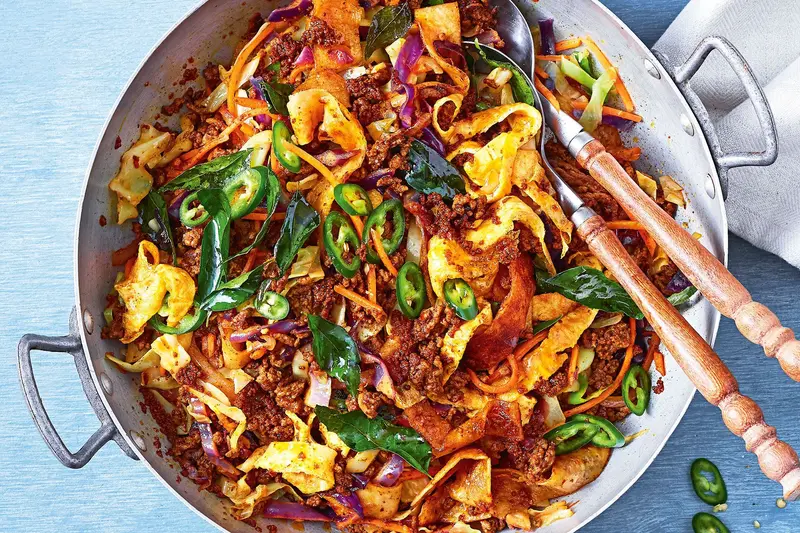
Hear the rhythmic metallic clatter coming from a restaurant or street cart at night — that's kottu. Shredded roti (godamba roti, a thin, layered flatbread) is chopped on a flat iron griddle together with vegetables, egg and your choice of protein. The cook uses two metal scrapers, and the sound carries for several streets. Read the full kottu roti guide →
Price: LKR 400–800 for a full portion. Available from late afternoon onwards at almost every local restaurant. The best kottu stalls attract queues by 7pm.
Hoppers — The Breakfast Street Food
Hoppers (appa) are bowl-shaped pancakes made from a fermented rice and coconut milk batter, cooked in a small iron wok. They are the characteristic breakfast food of Sri Lanka. The classic order is an egg hopper (with an egg cracked into the centre while cooking) eaten with pol sambol (coconut, chilli and lime). Available at dedicated hopper stalls and bakeries from around 6am until the batter runs out — usually by 10am. Full hoppers guide →
Price: LKR 30–80 each. You typically order three or four.
Galle Face Green — Colombo's Street Food Mile
Colombo's Galle Face Green oceanfront promenade hosts dozens of food carts from late afternoon until midnight, particularly busy on weekends. The food is not necessarily the finest in Sri Lanka, but the setting — eating on the grass beside the Indian Ocean, watching kites, surrounded by families and young people — is one of Colombo's great experiences. Look for:
- Isso wade and regular wade from dedicated stalls
- Kottu roti carts
- Thambili (king coconut) — fresh, with a straw, LKR 80–120
- Isso thel dala (stir-fried prawns) — the Galle Face Green speciality
- Ice cream carts and sugarcane juice
Pettah Market — Colombo's Street Food Quarter
Colombo's Pettah district is the wholesale market hub and home to the most intense street food scene in the city. The covered Pettah market has dedicated food stalls, and the surrounding streets have vendors selling almost every Sri Lankan snack. Best visited at lunchtime on a weekday. Try the rice and curry stalls on Olcott Mawatha — enormous portions at LKR 200–350 for lunch.
Drinks to Know
- Thambili (King Coconut) — the orange-husked young coconut sold from carts and vendors everywhere. The water inside is sweet and hydrating. LKR 80–120. One of the best drinks in a hot country.
- Woodapple juice — a thick, pungent, brown juice made from the woodapple (beli), often sold from carts in cities. An acquired taste — slightly sour, slightly fermented, deeply Sri Lankan. LKR 50–80 a glass.
- Faluda — a cold milk-based dessert drink with basil seeds, rose syrup, ice cream and vermicelli noodles, sold at confectionary shops and dessert stalls. LKR 200–400. Sweet and refreshing.
- Plain tea — heavily milky, heavily sugared black tea. The fuel of Sri Lankan daily life. Order "plain tea" at any bakery or roadside stall. LKR 30–60.
- Iced Milo — Milo (chocolate malt drink) on ice, sold cold from grocery shops. LKR 100–150. Beloved by every Sri Lankan child.
Where to Find the Best Street Food
- Colombo: Galle Face Green (evenings), Pettah (lunch), Manning Market
- Kandy: Kandy Central Market, evening food stalls around the lake
- Ella: Small town with good local bakeries on the main street
- Jaffna: Tamil street food is distinct — murukku (fried lentil spirals), ulundu wade, Jaffna hoppers (thicker and lacier than southern varieties)
- Bus stands: Every Sri Lankan bus stand has food vendors. Board a bus; get off and eat; board another. One of the most efficient ways to eat your way through the country.
Take a Sri Lanka Food Tour
A guided street food tour is the fastest way to eat your way through a Sri Lankan city — a knowledgeable local takes you to the spots you'd never find alone.
Find Food Tours in Sri LankaThis post contains affiliate links. We earn a small commission at no extra cost to you.
Food Safety Tips
- Eat hot food: Wade just out of the fryer, kottu still steaming — hot street food is almost always safe.
- Avoid cut fruit from carts: Freshly-cut fruit left out in the heat carries some risk. Whole fruit (thambili, bananas) is fine.
- Drink bottled or filtered water: Don't drink tap water. Ice is generally made from filtered water in tourist areas but be cautious in local markets.
- Right hand: If eating at a local table without cutlery, use your right hand. The left hand is considered unclean in South Asian culture.
- Spice level: Sri Lankan street food is frequently hotter than restaurant food cooked for tourists. If your tongue suggests caution, it's probably right. The pol sambol especially.
See also: complete Sri Lanka food guide, hoppers guide, kottu roti guide, rice and curry guide.