Quick Facts
- Location
- Matale District, Central Province
- Entrance Fee
- USD $30 (foreigners)
- Best Time to Visit
- Early morning (6–8am)
- Time Needed
- 3–4 hours
- Nearest Town
- Dambulla (17km)
- UNESCO Status
- World Heritage Site 1982
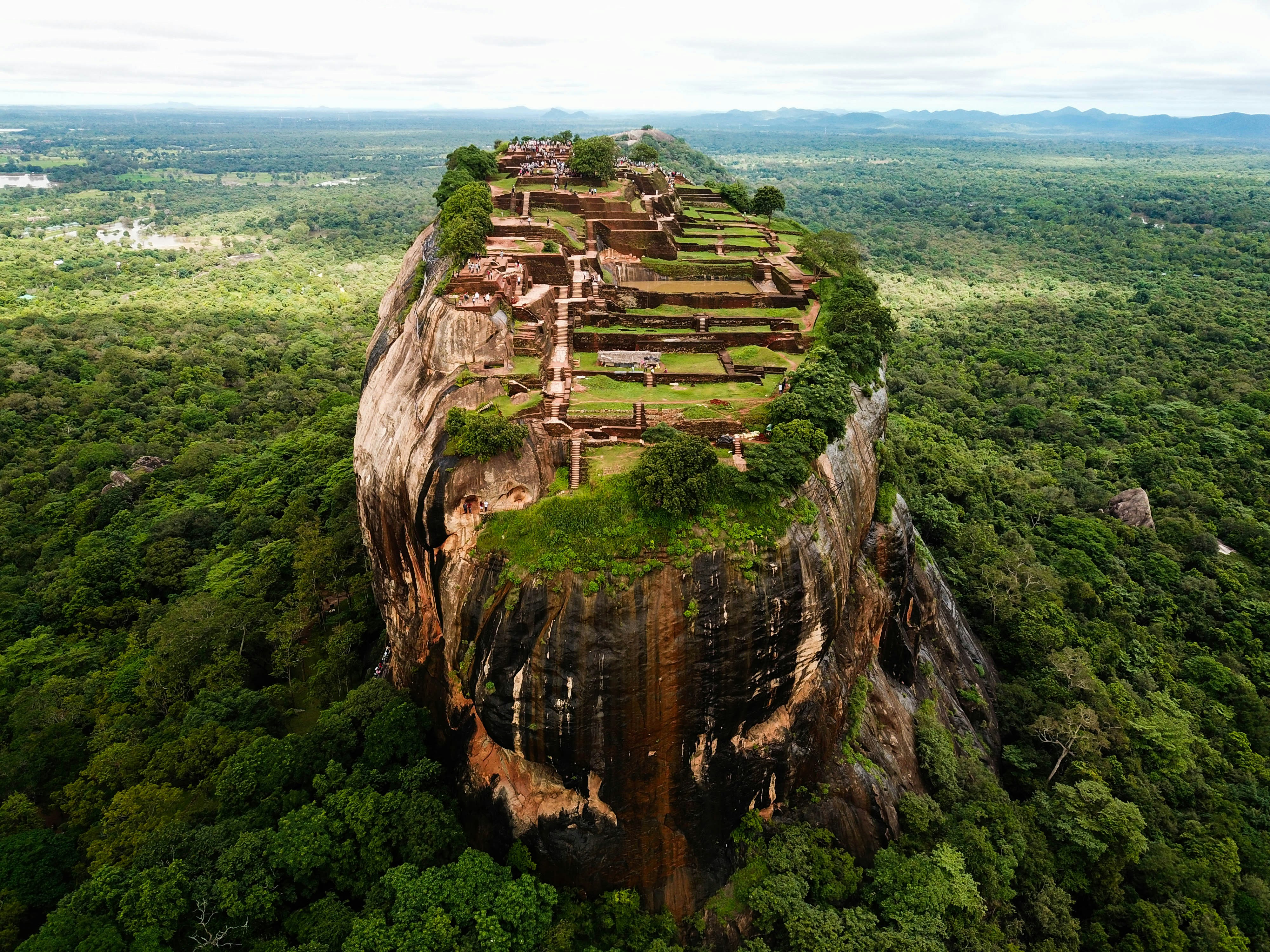
Rising 200 metres above the surrounding jungle plains, Sigiriya — also known as the Lion Rock — is Sri Lanka's most visited attraction and one of the most dramatic ruins in all of Asia. Built in the 5th century AD by King Kashyapa I, this ancient rock fortress is a testament to extraordinary engineering, artistry and ambition.
What is Sigiriya?
Sigiriya was built between 477 and 495 AD as both a palace and a fortress. King Kashyapa I chose this isolated monolith as his capital, constructing an extraordinary complex of gardens, pools, galleries and a palace on the summit. After his death, it became a Buddhist monastery until the 14th century.
Today it is a UNESCO World Heritage Site and the most visited attraction in Sri Lanka, drawing hundreds of thousands of visitors each year.
What to See at Sigiriya
The Water Gardens
Entering through the west, you first pass through the Water Gardens — a sophisticated hydraulic system of pools, fountains and pavilions that still operates partially today. The symmetrical gardens are among the oldest landscaped gardens in the world.
The Frescoes
Halfway up the rock, sheltered in a natural cavity, are the famous Sigiriya frescoes — a series of paintings depicting beautiful female figures, believed to represent either celestial nymphs or the king's consorts. Only 21 of the original 500 paintings remain visible.
The Mirror Wall
Just past the frescoes, the Mirror Wall was once so highly polished the king could see his reflection in it. Today it contains hundreds of ancient graffiti poems left by visitors from as early as the 8th century — one of the oldest collections of verse in the Sinhala language.
The Lion's Paws
The final ascent passes through a pair of enormous brick lion's paws — the only surviving part of what was once a gigantic lion statue carved into the rock face. The stairway passes through the lion's mouth.
The Summit Palace
The summit rewards the 1,200-step climb with breathtaking 360-degree views over the jungle and beyond. The ruins of the palace complex are clearly visible, with foundation walls, a swimming pool and a throne carved into the rock.
Best Hotels Near Sigiriya
Stay in one of the many excellent lodges and jungle resorts within walking distance of the rock. Prices range from budget guesthouses to luxury eco-resorts.
Search Hotels on Booking.comThis post contains affiliate links. We earn a small commission at no extra cost to you.
Practical Tips
When to Visit
Early morning is essential. Arrive at opening time (6am) to beat the tour buses that arrive from 8am onwards. The summit can become dangerously crowded by mid-morning, making the narrow staircases unpleasant. Early morning light is also best for photography.
How to Get There
- By tuk-tuk: From Dambulla (LKR 800–1,000 one way)
- By bus: Regular buses from Dambulla and Habarana
- By train: Nearest station is Habarana (15km away)
- Hire a driver: Most visitors use a private driver as part of a Cultural Triangle tour
What to Bring
- Plenty of water — there is none on the rock
- Sun protection: hat, sunscreen
- Comfortable closed shoes (not flip flops)
- USD $30 cash or card for entry
Book a Sigiriya Guided Tour
Get more from your visit with an expert guide who brings the history to life. Half-day and full-day tours available from Colombo, Dambulla and Kandy.
Find Tours on GetYourGuideThis post contains affiliate links. We earn a small commission at no extra cost to you.
Nearby Attractions
Sigiriya sits in the heart of the Cultural Triangle — consider combining it with:
- Polonnaruwa — ancient capital, 1 hour away
- Dambulla Cave Temple — 17km, equally impressive
- Minneriya National Park — famous elephant gathering, 30km