Last Updated: April 2026
Getting around Sri Lanka is half the adventure. The island is small enough that you can reach most destinations within a day, and the transport options range from the sublimely scenic (the highland train) to the exhilaratingly local (a crowded public bus) to the most practical (a private car with driver). Understanding the transport system and choosing the right option for each leg of your journey makes an enormous difference to your experience.
Trains — The Scenic Option
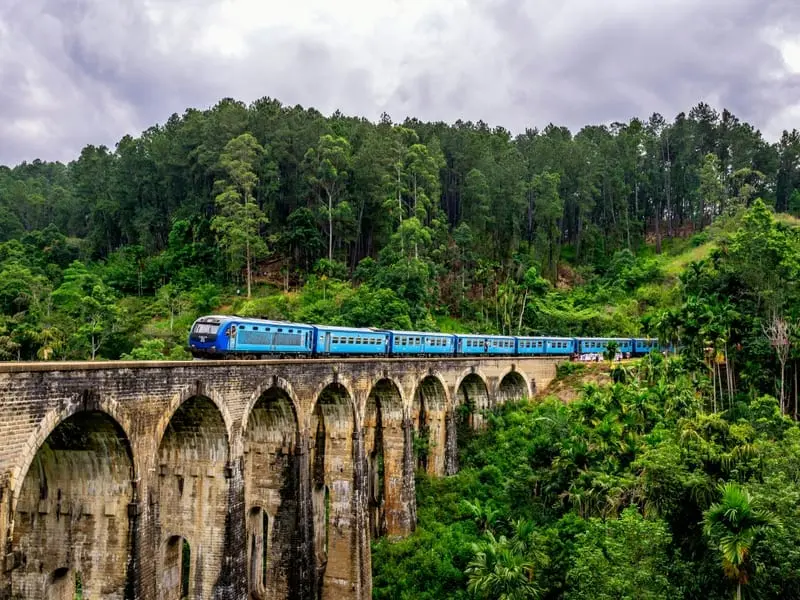
Sri Lanka's railway network is old, occasionally unreliable, and absolutely wonderful. The Kandy to Ella highland line is one of the world's great train journeys — a 7-hour ride through tea estates, mountain tunnels and stone viaducts. Book observation class or second class reserved seats well in advance (months ahead in peak season) via 12Go Asia or at Colombo Fort station. Third class unreserved seats are always available and are cheap — standing or sitting on a crowded carriage is an authentic experience for short sections. The coastal line from Colombo to Galle runs along the shoreline past beaches and fishing villages. The northern line to Jaffna (Yal Devi express) takes 6.5 hours and reopened after the civil war in 2014. Trains run on Sri Lanka time — delays of 30–60 minutes are common. See our full train rides guide.
Buses — The Local Experience
Sri Lanka's bus network is extensive and covers routes that trains don't. Public buses are cheap (LKR 50–300 for most routes) but can be crowded, hot, and driven at alarming speed. Private intercity buses (CTB and private operators) run express routes between major cities — faster, more comfortable, sometimes air-conditioned. The Colombo to Kandy expressway bus (via the E01 expressway) takes under 2 hours. For long-distance routes to the south or Cultural Triangle, buses are often faster than trains and depart more frequently. The main Colombo bus terminals are Bastian Mawatha (south and Cultural Triangle routes) and Pettah (most other directions).
Tuk-tuks — Short Journeys and Town Exploration
The three-wheeled tuk-tuk (auto-rickshaw) is the essential Sri Lankan urban vehicle — ubiquitous, cheap for short distances, and a genuine travel experience. For journeys under 5km, tuk-tuks are the right choice. Negotiate the price before departure outside of Colombo (the Colombo meter system works, but negotiation is the norm elsewhere). Approximate costs: LKR 150–300 for a short town journey; LKR 500–1,500 for cross-town; LKR 2,000–5,000 for a half-day hire. Tuk-tuks are not suitable for long-distance travel on highways (they are slow on the expressway and cannot carry much luggage). Apps: PickMe and Uber both operate tuk-tuk services in Colombo and increasingly in major tourist areas — metered, transparent pricing, no negotiation needed.
Private Car with Driver — The Most Practical Option
For touring Sri Lanka's highlights efficiently, hiring a private car with driver is the most popular option for mid-range and luxury travellers — and the cost, split among 2–4 people, becomes very reasonable. A typical day rate (up to 200km) is USD 50–80, including fuel and driver costs. Drivers double as informal guides — the best ones have excellent knowledge of the sites and can recommend restaurants, hidden viewpoints and local experiences. Book through a reputable agency or your hotel; confirm rates, fuel inclusion, and tipping expectations in writing. A circuit combining the Cultural Triangle, Kandy, Ella and the south coast typically takes 7–10 days by private car.
Stay Connected While You Travel Sri Lanka
A local SIM or travel eSIM is essential for navigation, booking rides, and looking up opening hours on the go. Read our full guide to Sri Lanka SIM cards and eSIM options.
Get a Travel eSIMAffiliate link — we earn a small commission if you purchase, at no extra cost to you.
Taxis and Ride-Hailing Apps
PickMe is Sri Lanka's dominant ride-hailing app — available for tuk-tuks, cars and larger vehicles in Colombo and major tourist centres. Uber also operates in Colombo. For airport transfers, pre-booked car services (through hotels or agencies) are more reliable than hailing a taxi in arrivals. Typical airport (BIA) to Colombo city transfer: USD 15–25 by app, USD 30–40 by hotel car.
Domestic Flights
FitsAir (previously Cinnamon Air) operates seaplanes and small aircraft connecting Colombo to Trincomalee, Batticaloa, Sigiriya, and the Maldives. Seaplane flights are spectacular — the views over the island are extraordinary. Cost: USD 100–200 per person per sector, depending on route. Useful for reaching the east coast (Trincomalee, Batticaloa) quickly when time is limited; less useful for the Cultural Triangle or Hill Country, where the scenery is best experienced slowly by road or train.
Book Sri Lanka Train Tickets
Book Kandy–Ella observation class seats in advance — these sell out weeks ahead in peak season.
Book via 12Go AsiaThis post contains affiliate links. We earn a small commission at no extra cost to you.
Driving Yourself
Self-drive car hire is available in Sri Lanka (international driving licence required) but is not recommended for most visitors. Sri Lankan road conditions, driving culture (frequent overtaking on blind corners, pedestrians and animals on roads), and the left-hand-drive requirement (Sri Lanka drives on the left) make self-driving genuinely challenging. Motorbike hire is available in some tourist areas — more manageable for experienced riders, but helmet availability and road safety remain concerns. The exception: renting a bicycle in the Cultural Triangle (Polonnaruwa, Anuradhapura) is excellent — the terrain is flat, the sites are spread out, and cycling is the traditional way to see the ruins.