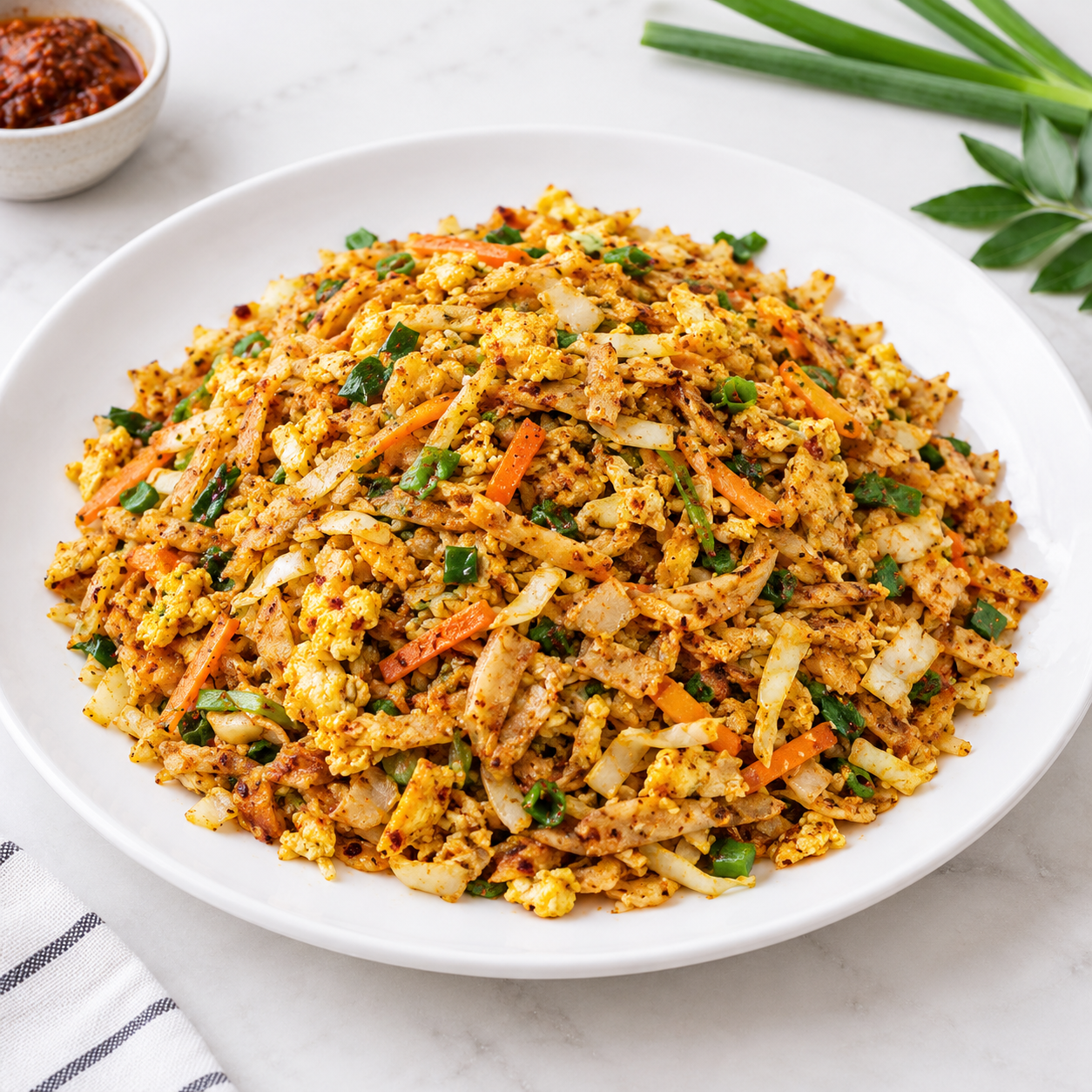
Kottu Roti: Sri Lanka's Best Street Food
Before you see kottu roti, you hear it. The rhythmic metallic clatter of two flat blades chopping against a hot iron griddle — a sound that carries down every Sri Lankan high street after dark — is one of the most distinctive sounds of travel in this country. When you follow it to its source, you'll find a cook shredding flatbread with furious speed, working it together with vegetables, egg, spices and your choice of protein into a steaming, fragrant heap that is one of the most satisfying things you can eat at 9pm.
Kottu roti is not fine dining. It is working-class street food, designed to be fast, filling and cheap. It is also, by a significant margin, the dish that most visitors to Sri Lanka think about most after they leave.
What Is Kottu Roti?
Kottu roti (also spelled "kothu roti" in the Tamil-influenced north and east) is made from godamba roti — a thin, slightly oily Sri Lankan flatbread similar to a paratha — that is torn or sliced into strips, then chopped into small pieces on a flat iron griddle using two broad metal blades. While the roti is being shredded, vegetables (leeks, carrots, cabbage, green chilli), egg, and a curry sauce are worked into it, and you add your choice of protein: chicken, beef, mutton, fish, prawn, or paneer (for vegetarians).
The cooking process is aggressive and fast — high heat, constant motion, the blades working the ingredients together until everything is evenly mixed and lightly charred. A good kottu is served in about five minutes from order. It arrives on a plate, often with a small cup of curry sauce on the side for dipping.
The Types of Kottu
Regular kottu: Made with standard godamba roti, egg, vegetables and curry. The most common version and usually the best.
Cheese kottu: Melted processed cheese is worked through the roti — sounds odd but works remarkably well, creating a slightly creamy, rich version that is enormously popular with Sri Lankan teenagers and young adults.
Paratha kottu: Made with paratha (a flakier, layered flatbread) instead of godamba roti — richer and more buttery.
String hopper kottu: Made with string hoppers (steamed rice noodle nests) instead of roti — lighter and less filling, with a different texture.
Koththu (northern Tamil style): In Jaffna and the north, the spicing tends to be stronger — more black pepper, less coconut — and the technique can vary slightly. Worth trying if you're travelling north.
The Sound of Kottu
The metallic clatter is not just a byproduct of the cooking technique — it is, in a sense, a form of advertisement. Kottu cooks develop their own rhythm; some are almost musical. The sound carries for 200–300 metres, drawing customers in from the surrounding streets. If you hear kottu being made somewhere you haven't been, it's worth following the sound.
The rhythm also tells you something about the cook: a fast, even chop suggests confidence and experience. A hesitant, uneven sound suggests a newer cook or a busy kitchen cutting corners. This is a small but useful heuristic when choosing where to eat.
Where to Find the Best Kottu
Local restaurants everywhere: Almost every Sri Lankan restaurant with a griddle serves kottu, usually from late afternoon through to midnight or later. The best kottu tends to come from busy places that make large volumes — the griddle stays hot, the roti goes in fresh, and the cook has made thousands of portions.
Colombo: Pettah and Borella are the traditional kottu heartlands — dense, fast-paced, serving enormous portions for LKR 300–500. The "Hotel" restaurants along Galle Road in Colombo 3 are reliably excellent. The night market on Galle Face Green has several kottu stalls.
Kandy: The area around the Kandy bus station has a cluster of kottu restaurants that open until 1am. Busy, cheap and very good.
Galle: The town centre outside the Fort has excellent local kottu restaurants. Inside the Fort, expect to pay two to three times as much for essentially the same dish.
Ella: The main street has several kottu places that are reliable — good value for the tourist town setting, though not as cheap as the interior of the country.
Beach towns (Unawatuna, Mirissa, Hikkaduwa): Tourist restaurants serve kottu along the beach roads — prices are higher (LKR 800–1,500) and quality varies. Walk five minutes off the beach and you'll find the same dish for a third of the price.
How Much Does Kottu Cost?
| Type | Local restaurant | Tourist area |
|---|---|---|
| Egg kottu (no meat) | LKR 250–400 | LKR 600–900 |
| Chicken kottu | LKR 350–550 | LKR 700–1,200 |
| Beef kottu | LKR 400–600 | LKR 800–1,400 |
| Prawn kottu | LKR 500–800 | LKR 1,000–1,800 |
| Cheese kottu | LKR 350–500 | LKR 700–1,000 |
Is Kottu Vegetarian?
Yes, with some caveats. Egg kottu with vegetables and no meat is genuinely vegetarian if you are not strict about eggs. Cheese kottu without meat is also vegetarian. The curry sauce used to flavour the kottu may contain chicken or beef stock — worth asking if you are strictly vegetarian. Paneer kottu is available at many restaurants as a fully vegetarian protein option.
Pure vegetarian kottu is common in the north and east of Sri Lanka, where Tamil vegetarian restaurants are widespread. In these areas, you can get a fully vegan kottu with no egg or dairy.
Tips for Ordering Kottu
Specify your protein first: "Chicken kottu, one" is the standard ordering format. The cook will assume a medium spice level.
Ask about spice: Default kottu is reasonably hot. If you want it milder, say "not spicy" (karavadda næhæ). If you want it hotter — rare but possible — ask for extra chilli.
The side curry matters: The small cup of curry sauce served on the side is not decoration — it's an integral part of the dish. Pour it over the kottu or dip pieces into it.
Eat it hot: Kottu is at its best in the first five minutes. It cools and tightens as it sits; eat immediately, standing at the counter if necessary.
Order a Lion lager: The combination of cold Lion beer and a plate of kottu at 9:30pm is one of the canonical Sri Lankan travel experiences.
Sri Lanka Food Tours
Explore Colombo's street food scene with a guided evening tour — kottu roti, hoppers, isso wade and everything else the city eats after dark.
Browse Food ToursThis post contains affiliate links. We earn a small commission at no extra cost to you.
Kottu vs. Roti: What's the Difference?
Roti (godamba roti) is the base flatbread used to make kottu — a plain, slightly oily flatbread served whole, usually with a curry for dipping or wrapping. Kottu roti is what you get when that flatbread is shredded, chopped and cooked again on the griddle with other ingredients. The two dishes share the same base ingredient but are completely different eating experiences.
Roti is a lighter, simpler meal — good as a snack or a quick lunch. Kottu is a full, filling, complex dish designed to satisfy after a long day. Both are excellent; both are worth eating.