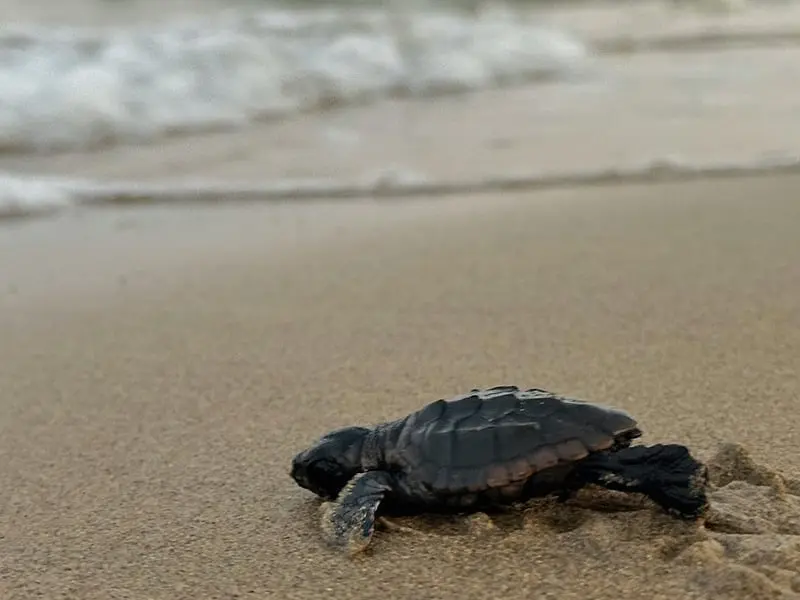
Sri Lanka is one of Asia's most significant sea turtle nesting destinations — all five species of sea turtle found in the Indian Ocean (green, leatherback, loggerhead, olive ridley and hawksbill) nest on its beaches. The south coast is the most important nesting area, with the beaches between Tangalle and Rekawa hosting significant nesting concentrations. For visitors, there are two quite different ways to experience this: the Rekawa Beach Conservation Programme, where conservation-monitored night watches allow you to observe nesting turtles on a wild beach; and the hatcheries at Kosgoda and elsewhere, which collect at-risk eggs and rear hatchlings for release.
Rekawa Beach — Wild Nesting Observation
Rekawa, 12km east of Tangalle, hosts one of the highest concentrations of sea turtle nesting in Sri Lanka — primarily green turtles, nesting between May and September. The Rekawa Turtle Conservation Project runs strictly controlled night watching sessions: small groups (max 8 people) wait on the dark beach under the supervision of trained rangers, who use red-light torches (white light disturbs nesting turtles) to locate nesting females. When a turtle is found, groups approach silently and observe from behind — watching a 200kg green turtle dig her nest, lay over 100 eggs and laboriously return to the sea is one of the most moving wildlife experiences in Sri Lanka. Sessions start around 8pm. Book through your Tangalle guesthouse.
Kosgoda Hatchery
The Kosgoda Sea Turtle Conservation Project, near Bentota, has operated since 1981 — one of Sri Lanka's longest-running turtle conservation programmes. Eggs collected from at-risk nests are incubated in protected conditions; hatchlings are held briefly before release. Visitors can tour the hatchery, observe the incubation process and — if timing allows — witness a hatchling release. Entry fee supports conservation. Open daily.
Ethical Considerations
Not all turtle experiences in Sri Lanka are equal. Commercial hatcheries that hold hatchlings for extended periods and charge for handling them are harmful — hatchlings should be released within 24–48 hours of hatching. Wild beach turtle watching with unregulated operators using white torches, approaching nesting females from the front, or allowing flash photography are all harmful practices. Choose operators affiliated with the Wildlife Conservation Society of Sri Lanka, the Turtle Conservation Project or similar organisations.
Best Time for Turtle Watching
Green turtle nesting at Rekawa peaks May–September. Loggerhead and leatherback nesting occurs October–April. The Kosgoda hatchery is active year-round. Night nesting watches are most productive during the peak nesting season.
Tips
- Rekawa nesting watches are never guaranteed — a female may not emerge on a given night
- Wear dark, non-reflective clothing for night beach visits
- Never use white torches or camera flash near nesting turtles or hatchlings
- Keep voices low and movements slow when near a nesting turtle
Book Turtle Watching Experiences
Guided night turtle watching at Rekawa and hatchery visits at Kosgoda — book through ethical, conservation-affiliated operators.
Find Turtle ToursThis post contains affiliate links. We earn a small commission at no extra cost to you.