Last Updated: April 2026
No vehicle captures the spirit of Sri Lanka quite like the tuk tuk — the cheerfully painted, three-wheeled auto-rickshaw that weaves through city traffic, bumps along coastal tracks, and squeezes through village lanes that no bus could navigate. Cheap, ubiquitous, and genuinely fun, the tuk tuk is the default mode of transport for millions of Sri Lankans and a highlight for most visitors. Whether you're negotiating a short hop from the station, hiring one for a full-day sightseeing loop, or embarking on a week-long tuk tuk road trip across the island, this guide covers everything you need to know.
What Is a Tuk Tuk?
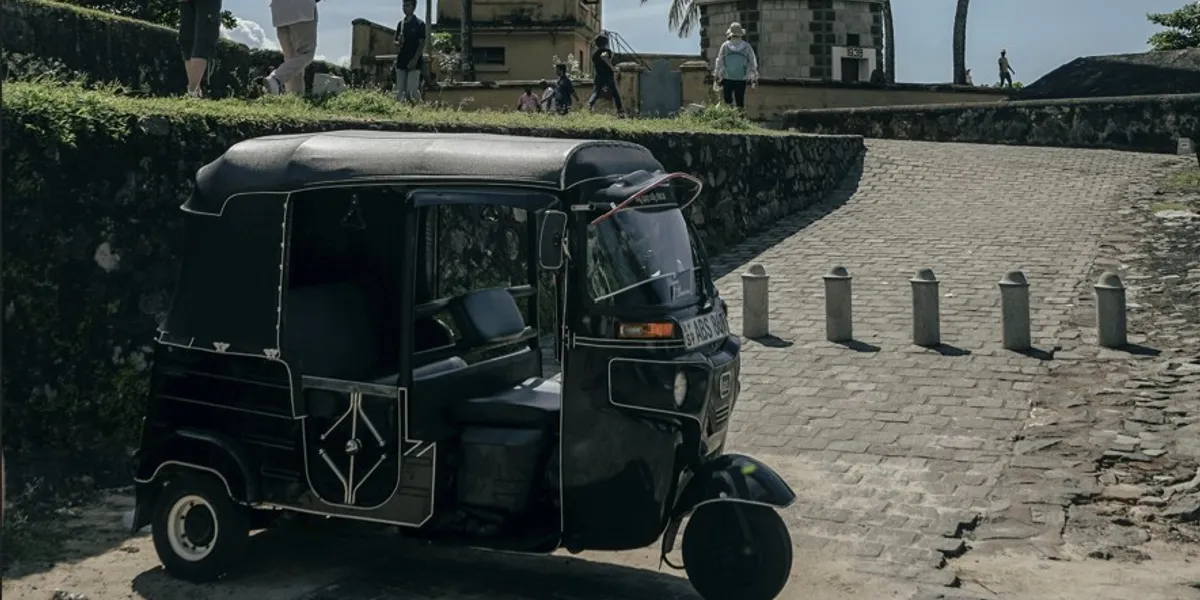
A tuk tuk — also called a three-wheeler, auto, or bajaj — is a small motorised three-wheeled vehicle with an engine typically between 150cc and 200cc. The driver sits in front with a handlebar (not a steering wheel); passengers sit in the open-sided rear cabin, usually comfortable for two adults and a squeeze for three. The name "tuk tuk" comes from the distinctive sound of the two-stroke engine — a rapid tok-tok-tok that you will quickly learn to associate with Sri Lanka.
Tuk tuks are everywhere in Sri Lanka. There are an estimated 1.2 million registered three-wheelers on the island, making them the most common form of hired transport after buses. In most towns, you will never wait more than a minute to find one.
Best Places to Hire a Tuk Tuk
Ella
Ella is the spiritual home of the tourist tuk tuk experience. The small hill country town is surrounded by tea plantations, waterfalls, and viewpoints that are perfectly suited to a leisurely tuk tuk day-trip. Hire one for a loop taking in Ravana Falls, Little Adam's Peak, Nine Arch Bridge (for the pre-dawn mist shot), and Ella Rock viewpoint — a full-day itinerary for around USD 15–20. Ella tuk tuk drivers are experienced with tourist routes and most speak enough English to be excellent impromptu guides.
Galle
Within and around Galle Fort, tuk tuks are the ideal way to explore — narrow colonial lanes are impassable for larger vehicles. A driver stationed near the Fort gate will happily show you the lighthouse, the Dutch Reformed Church, and the ramparts, then take you south along the coast to Unawatuna and Jungle Beach. Expect around USD 10–15 for a 3–4 hour tour.
Kandy
Kandy's hilly terrain makes walking between attractions tiring — a tuk tuk for a day of temple-hopping makes practical sense. A driver will take you between the Temple of the Tooth, Bahirawakanda Buddha statue, the Royal Botanical Gardens at Peradeniya, and any number of gem museums (the latter are where drivers earn commission, so manage expectations). Budget USD 12–18 for a full day in Kandy.
Colombo
In Colombo, tuk tuks are best for short hops between neighbourhoods — the traffic makes longer journeys unpredictable. Use the PickMe or inDriver app (see below) rather than flagging one down in the capital; metered app rides are dramatically cheaper and safer than negotiating on the street. Short hops within Colombo cost LKR 200–500 (USD 0.60–1.50).
How Much Does a Tuk Tuk Cost?
Sri Lanka tuk tuks are officially metered, but outside of Colombo the meter is rarely used. Prices are negotiated before you get in:
- Short hops (under 3km): LKR 150–300 (USD 0.50–1.00)
- Town to town (5–15km): LKR 500–1,500 (USD 1.50–4.50)
- Half-day hire (3–4 hours): USD 8–12
- Full-day hire (8 hours): USD 15–25
- Per-kilometre rate: approximately LKR 60–80/km (USD 0.18–0.25/km)
- Airport transfers (Colombo): USD 5–10 via app; USD 15–25 negotiated
Prices rise significantly at night and in high-tourist areas like Ella and Sigiriya. A quoted price of USD 25 for a day in Ella is reasonable — a quote of USD 50 is not. Use recent traveller reports on TripAdvisor or travel forums to calibrate current rates before arriving.
Tuk Tuk Apps: PickMe & inDriver
App-based tuk tuk booking has transformed urban travel in Sri Lanka, particularly in Colombo, Kandy, Galle and Negombo.
PickMe
PickMe is Sri Lanka's dominant ride-hailing app — the local equivalent of Uber. It offers tuk tuks, cars, and bikes at pre-set metered rates with no negotiation required. Prices are displayed before you confirm; payment can be by card or cash. PickMe is significantly cheaper than flagging a tuk tuk on the street in Colombo — a 5km journey that a street driver might charge LKR 600 for will cost LKR 300–400 on PickMe. Download before you arrive; it requires a local or international SIM for verification. Available on iOS and Android.
inDriver
inDriver operates differently — you name your price and drivers accept (or counter-offer). This makes it particularly good in areas where PickMe coverage is thinner, and savvy users often get below-market rates. It is widely used across Sri Lanka including in smaller towns. The bidding model can take a minute or two longer than PickMe but the savings can be meaningful on longer journeys.
Book Day Tours in Sri Lanka
Rather than navigating tuk tuk negotiations yourself, some travellers prefer guided day tours that include transport. Browse vetted day trips across Sri Lanka.
Browse Day ToursThis post contains affiliate links. We earn a small commission at no extra cost to you.
How to Negotiate Tuk Tuk Prices
Negotiating is expected and part of the experience — but it should be good-natured, not confrontational. A few principles:
- Know the rough rate before you ask. Check with your guesthouse what a fair fare is for your journey. This single piece of information is worth more than any haggling technique.
- State your destination and ask the price. Don't get in before agreeing a fare.
- Counter at 60–70% of the opening quote. You'll usually land somewhere in the middle, which is fair for both parties.
- Don't haggle over pennies. If you're arguing over LKR 100 (USD 0.30), you've crossed from fair negotiation into something less pleasant. Pay a fair price.
- Agree on whether the price is for the whole journey or per person. In tourist areas, some drivers quote per person — clarify upfront.
- Commissions are real. Drivers who take you to gem shops, restaurants, or hotels earn commission. It's fine to say "I don't want to stop at any shops."
Best Tuk Tuk Routes & Experiences
The Ella Loop
Ella → Nine Arch Bridge → Ravana Falls → Ella Rock viewpoint → Little Adam's Peak → Ella town. A classic 4–6 hour circuit through hill country tea country. Best started at 5:30am to catch Nine Arch Bridge at dawn before the crowds and mist burn off.
Galle Fort to South Coast Beaches
Galle Fort → Unawatuna → Jungle Beach → Dalawella → Koggala. An afternoon coastal run south of Galle, ending at sunset on one of the quieter beaches. Around USD 12 for a half-day.
Cultural Triangle Day Loop
Sigiriya → Pidurangala Rock → Dambulla Cave Temple, all in one day from a Sigiriya guesthouse. A driver hired from your accommodation for the day (USD 18–22) handles all parking and waiting — vastly easier than managing public transport between these sites.
Colombo Neighbourhood Hop
Pettah Market → Gangaramaya Temple → Galle Face Green → Colombo Fort → Beira Lake. A morning PickMe tuk tuk crawl through central Colombo costs under USD 5 total in app fares and is far more practical than walking in the heat.
The Tuk Tuk Road Trip Trend
In recent years, a growing number of travellers — particularly backpackers — have been renting a tuk tuk for 1–2 weeks and self-driving a circuit of Sri Lanka. The Tuk Tuk Club and similar rental outfits in Colombo and Negombo offer fully licensed tuk tuks for hire to foreign nationals with driving experience. Costs range from USD 25–40 per day with insurance and support packages.
The appeal is obvious: complete freedom, extraordinary encounters with local life, and the unforgettable experience of chugging over mountain passes at 40km/h with the whole island in front of you. The practical reality is also worth understanding: tuk tuks have no suspension to speak of on bad roads, overtaking is nerve-wracking on mountain hairpins, and breakdowns — though usually easily fixed — do happen. Recommended for adventurous travellers with some motorbike or small vehicle experience. Not recommended for anyone nervous about chaotic traffic.
Popular self-drive routes include: Colombo → Galle → Ella → Kandy → Sigiriya → Colombo (the classic circuit, 7–10 days) and the north loop: Colombo → Mannar → Jaffna → Trincomalee → Colombo.
Tips for Hiring a Tuk Tuk Safely
- Always agree the fare before getting in — this is the single most important rule.
- Use apps in cities. PickMe and inDriver in Colombo, Kandy, Galle, and Negombo are safer and cheaper than street flagging.
- Avoid tuk tuks outside major stations at night. Touts at bus and train stations (especially Colombo Fort) target new arrivals. Walk a minute away from the station or use an app.
- Carry small notes. Tuk tuk drivers frequently claim not to have change for LKR 1,000 or 2,000 notes. Carry LKR 500 notes.
- Don't share with strangers. Shared tuk tuks are normal in some rural areas but tourist passengers should not share with strangers arranged by the driver.
- Note the vehicle number. All tuk tuks have a visible licence plate — take a photo when you get in if you're carrying bags, in case items are left behind.
- For longer journeys, get a written agreed price — or take a photo of the agreed amount on your phone with the driver in the background. It avoids disputes on arrival.
Getting Around vs. Getting There
Tuk tuks are ideal for local exploration and short transfers but are not suited to long-distance travel between cities. For journeys over 30km, trains and buses are far more comfortable, faster, and cheaper. Use tuk tuks at each destination; use Sri Lanka's excellent rail network — especially the Kandy to Ella scenic line — for the major legs of your journey.