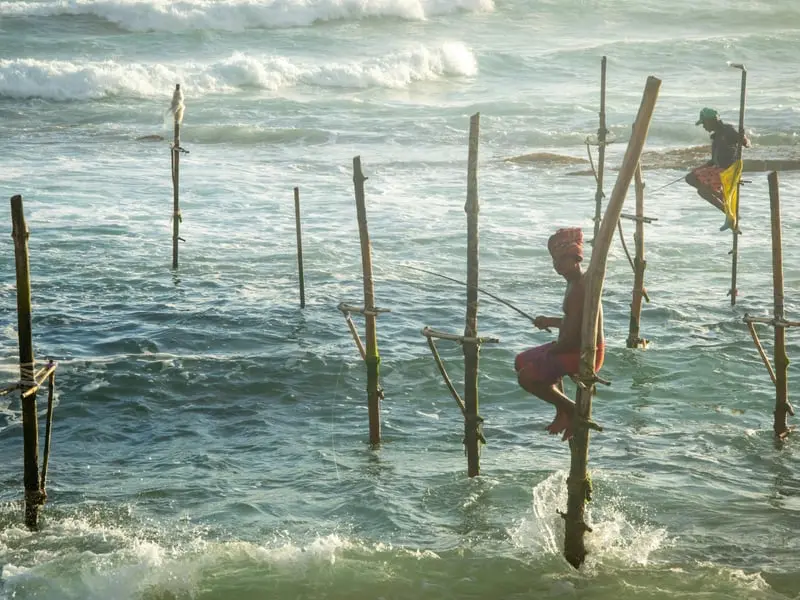
Sri Lanka's stilt fishermen are one of the most iconic images of the island — men seated on a thin horizontal pole (called a "stilt" or petta) fixed to a vertical pole driven into the seabed, fishing with a simple rod and line in the shallows of the Indian Ocean as the waves break around them. The practice is believed to have originated after World War II when a shortage of fishing spots near the shore forced fishermen to find new positions. Today the stilts are a cherished cultural tradition, a tourist attraction, and an enduring symbol of Sri Lanka's relationship with the sea.
Where to See Stilt Fishing
The most famous stilt fishing locations are along the south coast between Galle and Weligama. The stilts at Koggala, Ahangama and Weligama are the most photographed. The fishermen typically fish at dawn and dusk when the tide is right — these are also the best times for photography, when the golden light catches the silhouettes against the sea. During the south coast tourist season (December–April), the fishermen are a regular sight along the coastal road.
Photography & Etiquette
The stilt fishermen have become accustomed to tourist photography — this is partly because many now charge a fee for photographs. This is entirely legitimate: you are photographing their place of work and they deserve compensation. Agree a fee (LKR 200–500 is typical) before photographing. The best shots are taken from a distance with a long lens — you capture the scene naturally rather than a posed situation. The golden hour before sunset gives the most dramatic silhouette photographs.
Learning to Fish from Stilts
Several operators along the south coast offer tourist experiences of actually using the stilts — climbing onto the pole and fishing briefly in the traditional manner. This is a genuine, if theatrical, cultural experience. The fishermen are patient teachers and the experience of balancing on a stilt above the Indian Ocean (even in calm, shallow water) gives a new appreciation for the skill involved. Ask at your guesthouse in Weligama or Ahangama for current operators.
Getting to the Stilt Fishing Areas
From Galle, take the A2 coastal road east towards Weligama — the stilt fishing spots are visible from the road between Koggala (10km east of Galle) and Weligama (27km east of Galle). Tuk-tuks from Galle cost LKR 500–700 to Koggala. The spots are also visible from the coastal train — passengers on the left side (heading east) get the best views.
Best Time to Visit
Dawn and dusk during the south coast season (November–April). The fishermen fish when conditions suit them — ask locally the evening before which spots will have fishermen at dawn. The stilts are most atmospheric on calm days when the sea is flat.
Tips
- Bring a long lens (200mm minimum) for the best photographs from a respectful distance
- Visit at sunrise for the golden light and the most active fishing
- Agree the photography fee before shooting — it avoids uncomfortable negotiations afterwards
- Combine with a morning at Galle Fort (15–20 minutes west) for a great south coast half-day
Find Hotels Near Weligama
Weligama has excellent guesthouses along the beach — a perfect base for south coast exploration including stilt fishing villages.
Search Hotels on Booking.comThis post contains affiliate links. We earn a small commission at no extra cost to you.