Sri Lankan Food Guide: What to Eat, Where to Eat & Must-Try Dishes
Sri Lankan cuisine is one of Asia's most aromatic and complex — a food culture shaped by centuries of Indian, Arab, Dutch, Portuguese and British influence, built around a core of fresh coconut, chilli, and spice that is unlike anywhere else. Yet it remains surprisingly unknown to the wider world. Arriving in Sri Lanka expecting "Indian food but different" will leave you unprepared for the depth and distinctiveness of what you'll encounter.
This guide covers the essential dishes, the best places to eat, and how to navigate the food culture of an island where a full meal can cost LKR 300 from a roadside kade or LKR 5,000 at a boutique hotel restaurant — and both can be extraordinary.
The Staple: Rice and Curry
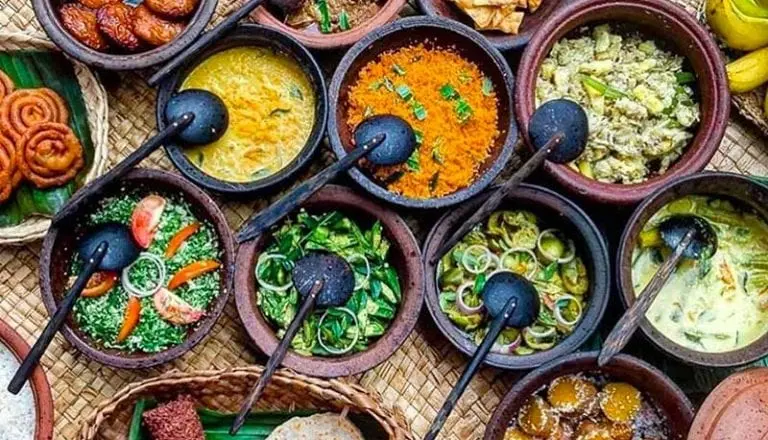
Sri Lankan rice and curry is not a single dish but a ritual — a spread of small curry portions served alongside rice, eaten together in combinations. A typical meal includes:
- The rice: white or red (the traditional Sri Lankan grain), served with dhal (lentil curry) as the base
- Vegetable curries: 2–4 small portions — typically jackfruit, drumstick, pumpkin, green bean or bitter gourd
- A protein curry: fish, chicken, mutton or egg — depending on region and occasion
- Pol sambol: freshly grated coconut with red chilli, onion and lime — essential accompaniment
- Papadums and pickle: often included
The best rice and curry in Sri Lanka comes from family-run kades (local eateries) where the curries have been simmering for hours. Ask for a rice packet — the local term for a take-away portion wrapped in banana leaf. Under LKR 300, and better than anything a tourist restaurant can produce.
Hoppers (Appa)
Hoppers are Sri Lanka's most distinctive breakfast food — bowl-shaped fermented rice pancakes, crisp at the edges and soft in the centre, cooked in a small wok-like pan. They come in several forms:
- Plain hopper: the base, eaten with coconut sambol and dhal
- Egg hopper: an egg cracked into the centre while cooking — the most popular variety
- Milk hopper: coconut milk added for a richer, sweeter version
- String hoppers (Idiyappam): thin rice noodles pressed into nest shapes — usually breakfast, eaten with coconut sambol or dhal
The best hoppers are made to order and eaten immediately. Many guesthouses serve them for breakfast; find them at hopper-specific stalls that open in the evenings in towns and villages.
Kottu Roti
Sri Lanka's definitive street food — strips of roti chopped and stir-fried on a flat iron griddle with egg, vegetables, and your choice of protein. The rhythmic clanging of the metal blades that chop the kottu is the soundtrack of Sri Lankan evenings. It is loud, theatrical, and the result is deeply satisfying. Ask for chicken kottu or egg kottu. Cheese kottu is a local favourite. Under LKR 500 from a street stall.
Seafood
Sri Lanka is an island and the seafood reflects it. The south coast and east coast both have excellent fresh catches:
- Grilled reef fish: ordered by weight from beach restaurants, often grilled with garlic, chilli and lime
- Crab curry: a south coast speciality — coconut milk curry with mud crab. Ministry of Crab in Colombo is the famous high-end version; local versions at beach restaurants are equally good for a fraction of the price
- Prawn curry: available at any coastal town; often prepared with coconut milk and tomato
- Ambul thiyal: the distinctive black "sour fish" curry from the south — fish preserved with goraka (a sour fruit), cooked dry. A unique taste unlike anything else
Short Eats
Sri Lankan bakeries and tea shops serve short eats — bite-sized savoury snacks eaten with tea at any time of day:
- Isso vadai: lentil fritters topped with a whole prawn — a Jaffna speciality found across the island
- Mutton rolls: cylindrical pastries filled with spiced mutton
- Fish cutlets: spiced fish cakes, crumbed and fried
- Pattis: small pastry parcels with savoury fillings
The best short eats come from traditional family bakeries, not tourist cafes. Look for a glass display cabinet at the counter of any local tea shop.
Street Food Worth Seeking
- Gotu kola sambol: raw centella herb with coconut, onion and chilli — incredibly nutritious, eaten as a condiment
- Pol roti: thick flatbread made with coconut and sometimes green chilli — one of the best breakfast options
- Wattalapam: a rich steamed pudding of coconut milk, jaggery and cashew — Sri Lanka's best dessert and a Malay influence brought by the Dutch
- Wood apple juice: from the hard-shelled Sri Lankan wood apple; sweet, sour and completely unlike anything you've tasted
Where to Eat
- Local kades (roadside eateries): the best and cheapest food on the island. No menus, no decor — just excellent rice and curry. LKR 200–400 for a full meal.
- Colombo restaurants: the city has an excellent dining scene — Ministry of Crab, Gallery Café, and Noodles are standouts. USD 15–50/head.
- Galle Fort restaurants: Galle has the most sophisticated restaurant scene outside Colombo — excellent seafood and modern Sri Lankan cuisine. USD 15–30/head.
- Guesthouse cooking: across the island, guest house owners cooking fresh breakfast and dinner for guests often produce the best meals. Ask if they cook and say yes.
Food Safety Tips
- Stick to cooked food at street stalls — avoid raw salads and unpeeled fruit from unknown sources
- The rule for curry applies: if it smells good and the turnover is high, it's safe and fresh
- Drink bottled water — tap water is not safe for consumption
- Sri Lankan food is genuinely spicy — if you have a low tolerance, say "mild, not spicy" when ordering. Most restaurants will accommodate, though some curries cannot be de-chillied
Sri Lankan food is one of the great pleasures of travelling the island — and one of its most underrated. The combination of fresh spice, coconut, and generations of culinary tradition produces food that is deeply satisfying and endlessly varied. Eat everywhere, try everything, and let the kade owners feed you well.
Last Updated: April 2026