Sigiriya Rock Fortress: The Complete Visitor's Guide
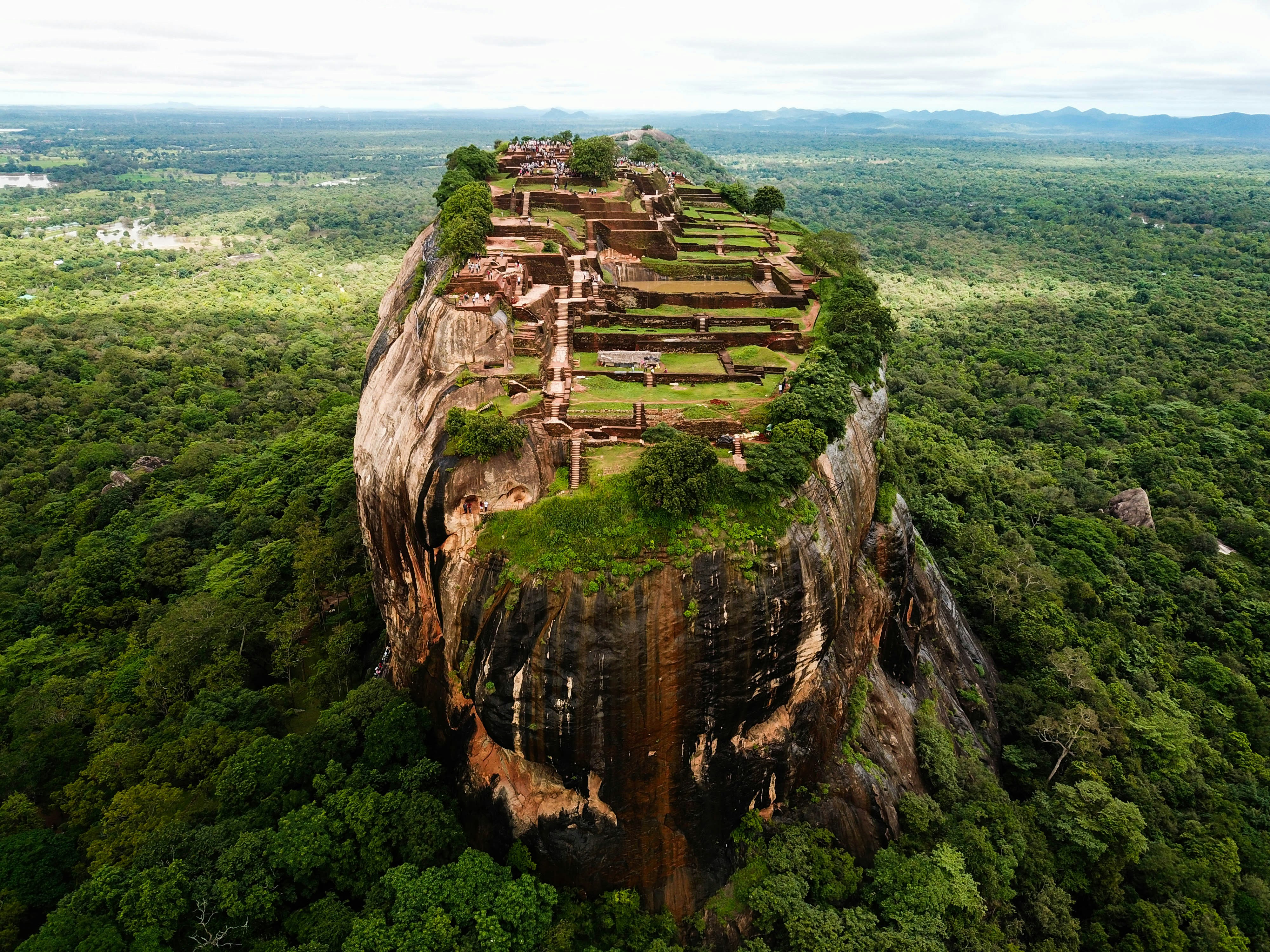
Sigiriya is arguably the most extraordinary ancient monument in South Asia. Rising 200 metres above the surrounding jungle from a seemingly impossible volcanic plug of granite, the 5th-century rock fortress of King Kashyapa is a UNESCO World Heritage Site, Sri Lanka's most visited attraction, and one of the genuine wonders of the ancient world.
What makes Sigiriya remarkable is not merely its scale but its sophistication. The palace complex built atop the rock between 477 and 495 AD included mirror-polished plaster walls, ornamental gardens with hydraulic fountains (still partly functional), gallery frescoes of celestial maidens that have survived 1,500 years, and a throne room with views over an empire. That this was built in the 5th century, in the tropics, by a king who had murdered his father and seized the throne — is extraordinary.
The History of Sigiriya
Kashyapa I came to power by imprisoning his father Dhatusena behind a wall of mud and seizing the throne from his legitimate heir, Moggallana, who fled to India. Fearing his brother's return, Kashyapa built his palace on Sigiriya rock — a naturally defensible position, but also a statement of divine ambition. He believed himself to be Kubera, the god of wealth.
When Moggallana returned with an Indian army in 495 AD, Kashyapa descended from the rock to meet him in battle. His elephant turned away from a swamp, his troops misread this as retreat, and the army fled. Kashyapa died by suicide — possibly his own sword. Moggallana converted the fortress to a Buddhist monastery, which it remained until the 14th century.
What to See at Sigiriya
The Water Gardens
The approach to the rock passes through one of the world's oldest landscaped gardens. The symmetrical gardens with their pools, fountains and serpentine water channels are bisected by a central causeway. Remarkably, some of the underground hydraulic pipes still function during the rainy season, feeding the fountains as they did 1,500 years ago. Arrive early and walk slowly — most visitors rush through to get to the rock.
Boulder and Terrace Gardens
Beyond the formal water gardens, the approach climbs through boulder gardens featuring caves with ancient drip-ledge inscriptions, and terrace gardens carved into the lower slopes of the rock. The engineering of these terraces — buttressed against the rock, with elaborate drainage — is remarkable.
The Mirror Wall
A polished plaster wall running along the rock face was so well-made that ancient visitors could see their reflection. Those visitors left graffiti — the earliest dating from the 8th century, making them among the oldest surviving examples of Sinhala script. The poems and observations written on the wall form a unique historical record. The wall is now protected behind barriers, but the content (translated on information boards) is worth reading.
The Frescoes
A spiral staircase leads to a sheltered pocket in the cliff where 22 of an original estimated 500 frescoes of celestial maidens survive. Painted in the 5th century using mineral pigments, these figures — possibly apsaras (heavenly nymphs) or women of the royal court — remain vivid and detailed after 1,500 years. This is the emotional highlight of the site. Photography is permitted.
The Lion Paws and Summit
The final approach passes through the paws of an enormous carved lion (the head and body collapsed long ago) that once framed the entrance to the summit palace. A steep metal staircase bolted to the rock face leads to the top. The summit holds the remains of the royal palace: cisterns cut into the rock, a throne platform, and the foundations of royal chambers. The 360° views over the jungle and reservoir system below are breathtaking.
Entry Fees and Tickets
- Foreign adults: USD 30
- Foreign children (6–12): USD 15
- Sri Lankan nationals pay significantly less
- Tickets include entry to the entire site including water gardens, frescoes and summit
- Book online at the Cultural Triangle Board website to skip the gate queue
Opening Hours
Open daily 7am–5:30pm. Last entry at 5pm. The site illuminates briefly at dusk but summit access closes earlier.
Best Time to Visit
Arrive at 7am when the gates open. The summit clouds over by mid-morning on most days, and the crowds become intense after 9am when tour buses arrive from Kandy, Colombo and Dambulla. The early morning light on the rock is also dramatically better for photography. December to March is the driest period with the clearest summit views.
Getting to Sigiriya
- From Colombo: approximately 4.5 hours by car or bus. Take the A6 highway via Kurunegala and Dambulla.
- From Kandy: 2.5–3 hours by car through the Matale hills.
- From Habarana: 20 minutes by tuk-tuk — the most common nearby base.
- By bus: Regular services from Dambulla (45 minutes) to Sigiriya village; tuk-tuk from village to site.
What to Combine Sigiriya With
- Pidurangala Rock (2km away): a shorter climb giving the famous aerial view of Sigiriya — combine in the same day
- Dambulla Cave Temple (18km): the most impressive Buddhist cave temple in Sri Lanka — 5 caves with 150+ Buddha statues
- Minneriya National Park (30km): the Great Elephant Gathering (July–October)
- Polonnaruwa (60km): the second ancient capital, best visited the following day
Sigiriya rewards the curious visitor who goes slowly. Rush it and you'll see a tall rock with some old ruins. Take three hours and engage with the water gardens, the mirror wall graffiti, the frescoes, and the extraordinary view from the summit — and you'll understand why this is considered one of the greatest achievements of the ancient world.
Last Updated: April 2026