Nuwara Eliya: Sri Lanka's
Little England in the Clouds
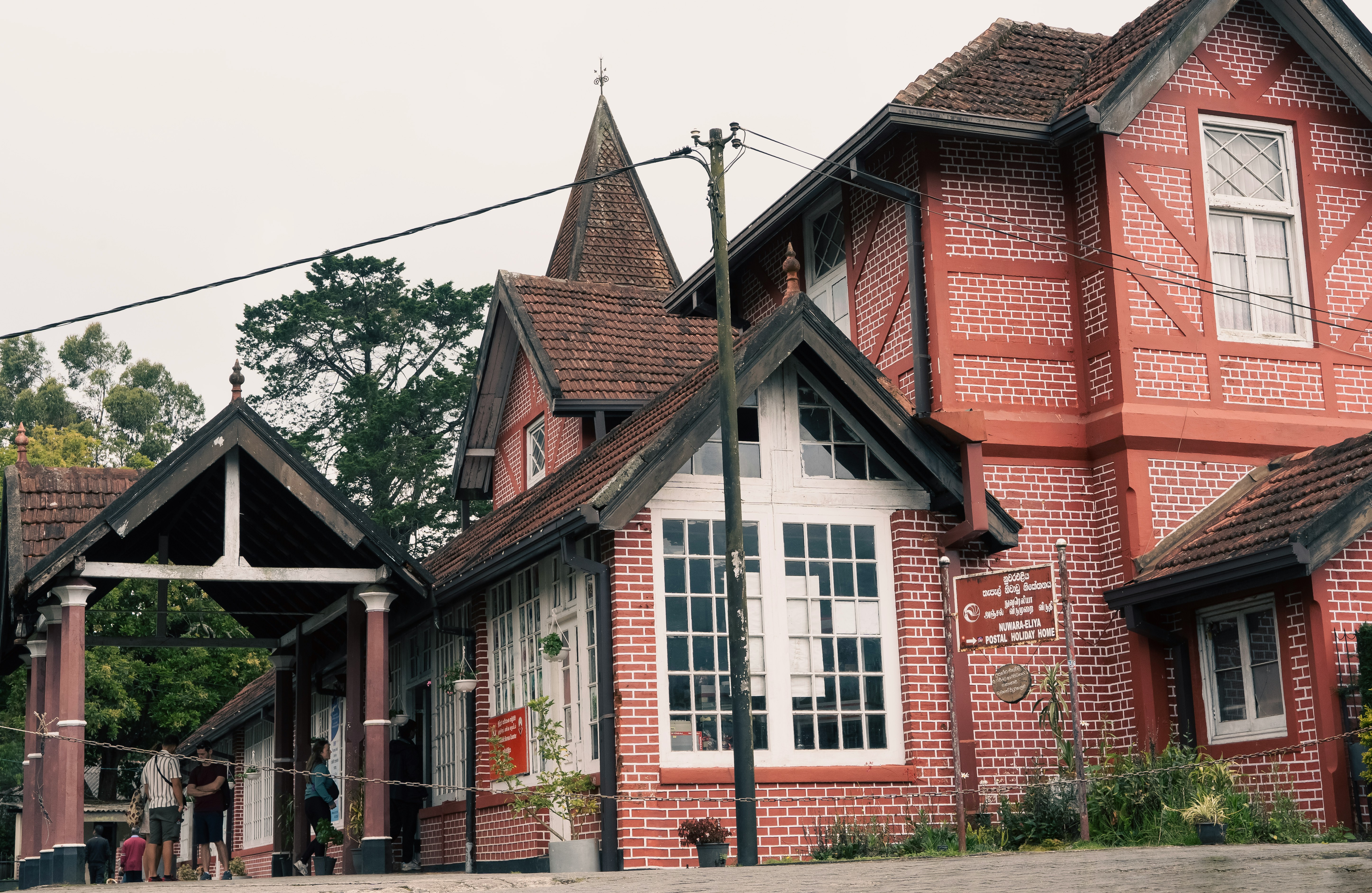
You are standing in Sri Lanka — a tropical island in the Indian Ocean — and yet somehow you are looking at a Tudor red-brick post office with a clock spire, a granite gentlemen's club with a dress code, and hedgerows so neatly trimmed they could have been clipped in the English Midlands. The mist rolls in off the mountains. It is sixteen degrees and you need a jacket. This is Nuwara Eliya, and there is nowhere else quite like it in Asia.
At 1,868 metres above sea level in Sri Lanka's central highlands, Nuwara Eliya functions as a genuine geographic anomaly — a fully intact 19th-century English hill station operating in the middle of the cloud forest. The British colonial planters who built it didn't just put up a few buildings; they reconstructed an entire civilisation, complete with a golf club founded in 1889, a horse-racing track, cold streams stocked with imported trout, and afternoon tea served on verandahs overlooking manicured lawns. Most of it is still here, still functioning, and entirely surreal.
Why the British Built "Little England" Here
To understand Nuwara Eliya, you have to understand the misery of 19th-century colonial life in Colombo. The humidity was crushing. The heat was relentless. Malaria was endemic in the lowlands. British administrators and tea planters — most of whom had signed up for years-long postings far from home — found in Nuwara Eliya something they hadn't expected to find anywhere in Asia: a climate that felt like England.
At nearly 1,900 metres, the town averages a crisp 16°C year-round. The hills roll in the same gentle way as the English countryside. Morning mist blankets the valleys just as it does in Somerset. The British didn't merely tolerate this environment — they saw it as a gift and systematically turned it into a perfect replica of home. By the late 1800s, Nuwara Eliya had everything a British colonial could want: a golf club, horse racing, fox hunting, fishing for trout, and a social scene built around the two colonial grand hotels. The nickname "Little England" was not marketing; it was an accurate description.
The Colonial Buildings You Can Still Visit
The Post Office (1894) — The Town's Most Famous Building
Nothing announces Nuwara Eliya's colonial identity quite like its post office. Built in 1894, this two-storey Tudor-style building of vivid red brick with a distinct clock spire is the most photographed structure in the entire hill country. It remains one of the oldest operating post offices in Sri Lanka — you can actually walk in, buy stamps and post a letter from a building that looks like it belongs in a Victorian English market town. If you do nothing else in Nuwara Eliya, photograph this building in the early morning light, when the mist is still sitting on the hills behind it.
The Grand Hotel — A Governor's Residence Turned 5-Star
Originally built in 1828 as the single-storey private residence of British Governor Sir Edward Barnes, the Grand Hotel has grown around its Elizabethan-style core — white gables, half-timbered walls and sprawling, razor-manicured lawns — into one of Sri Lanka's great colonial hotels. The original manor features prominently at the centre of the building, and even if you're not staying here (rooms from around $100 a night), the grounds are open for guests having afternoon tea.
Afternoon tea at The Grand is one of Nuwara Eliya's essential experiences: finger sandwiches, scones with jam, and a pot of Ceylon tea, served on a verandah overlooking lawns that could have been transplanted from the English Home Counties. The incongruity — cloud forest visible on the hills above, tea fields stretching away below — is the whole point.
The Hill Club (1876) — The Empire's Last Outpost
If the Grand Hotel is theatrical, The Hill Club is the real thing. Built from rugged granite blocks by elite British coffee and tea planters in 1876, it still looks and — critically — still operates like a strict private gentlemen's club from the height of Empire. The billiard rooms are intact. The trophy room looks unchanged since 1910. The formal dining room requires jacket and tie at dinner, and the dress code is enforced.
Non-members can dine here by arrangement, and it is one of the strangest and most atmospheric meals you can have in Sri Lanka. The menu runs to mutton chops, roast meats and school-dinner puddings — entirely deliberate, entirely unreformed. There is something extraordinary about sitting in a dark-panelled dining room at 1,800 metres in a tropical island, eating English food under the portraits of long-dead colonial officials. The Hill Club makes no apologies for what it is, which is precisely what makes it worth visiting.
The Nuwara Eliya Golf Club (est. 1889)
Founded in 1889, this is one of the oldest golf clubs in Asia — and almost certainly the most scenically situated. The 18-hole course sits at high altitude surrounded by tea estates, with mountain views that would distract even a serious golfer. Visitors with a handicap certificate can play. The clubhouse — all dark wood panelling, framed photographs and trophy cases — is worth seeing even if golf isn't your thing. A round here costs a fraction of equivalent courses elsewhere in Asia.
The April Races — Sri Lanka's Most Glamorous Day Out
Every year during Sinhala and Tamil New Year week (around 13–14 April), something remarkable happens in Nuwara Eliya. The Royal Turf Club, which has been running horse races here since the British founded it in the 1880s, hosts what has become Sri Lanka's most glamorous annual social event. The Colombo elite — politicians, business figures, socialites and their extended families — arrive in force. The town's hotels book up six months in advance. The roads into Nuwara Eliya become gridlocked for days.
The racing itself is not world-class — this is not Ascot. But the racing is almost beside the point. What the April Races provide is something rare in modern South Asia: a direct, unironic continuation of a Victorian English tradition that has survived independence, civil war and rapid modernisation intact. Watching Sri Lanka's upper crust dress up in their finest for a tradition that has run continuously since the 1880s is one of the most fascinating things you can witness in the country. If you can time a visit to coincide with the races, do it — just book your accommodation months ahead.
Hakgala Botanical Gardens — Where Tea Was Born
Eight kilometres from town, the Hakgala Botanical Gardens sit on the steep slopes beneath the dramatic Hakgala Rock at over 1,700 metres — the second-largest botanical gardens in Sri Lanka and one of the highest-altitude gardens in the world.
Most visitors come for the flowers, and they are extraordinary: over 300 varieties of temperate roses (the Rose Garden peaks March–May), a century-old Bulb Garden, magnolias, rhododendrons, and sections of prehistoric tree ferns that give the gardens an almost Jurassic quality. Because of the frost-nipped highland climate, Hakgala is one of the only places in South Asia where English cottage flowers — pansies, delphiniums, dahlias — bloom comfortably alongside tropical forest.
But the deeper significance is botanical history. When British botanists established Hakgala in 1861, it served as an experimental cultivation site for plants that would eventually shape the island's entire economy. This is where some of Sri Lanka's very first tea bushes were cultivated — the direct ancestors of the Ceylon Tea industry that today generates over $1 billion annually. Walking through a garden this beautiful while knowing you're standing at the birthplace of an entire industry adds a satisfying layer to the experience.
There is also a mythological dimension. According to the Ramayana, this precise area is believed to be the Ashoka Vatika — the enchanted pleasure garden where Ravana kept Sita captive. A statue of Sita marks the spot within the gardens, and the area draws a steady stream of Hindu pilgrims from India year-round. Combine Hakgala with the nearby Seetha Amman Temple (500 metres away) for the full Ramayana story.
Practical: Open 7:30am–5:30pm daily. Entry approximately LKR 1,500 for foreign visitors. Budget 1.5–2 hours, longer if the Rose Garden is in full bloom.
Where to Stay in Nuwara Eliya
From the colonial Grand Hotel and Hill Club to cosy tea estate bungalows — Nuwara Eliya has some of the most characterful accommodation in Sri Lanka.
Find Hotels in Nuwara EliyaThis post contains affiliate links. We earn a small commission at no extra cost to you.
Tea Factory Tours — The Hill Country's Other Attraction
Nuwara Eliya produces what many consider Ceylon's finest teas — high-altitude growing conditions create a distinctive bright, brisk, golden-liquor character that's markedly different from the fuller-bodied teas grown at lower elevations. Two factories are especially good for visitors:
- Pedro Tea Estate — a working estate with regular guided tours showing the full process: plucking, withering, rolling, oxidation, firing, grading. The factory itself is beautifully maintained, and the surrounding fields offer some of the best walk-through-the-tea-estate scenery in the region.
- Damro Labookellie — on the main road from Kandy to Nuwara Eliya, making it an easy stop on the way in. Well-organised tours, excellent tasting room, and a viewpoint over the fields that most visitors photograph as their Sri Lanka screensaver.
The best time to visit either factory for active plucking is the morning — tea plucking typically happens in the early hours. Tamil estate workers in brightly coloured saris and headbands moving through an unbroken sea of vivid green is one of the iconic images of Sri Lanka and worth timing your arrival around.
Victoria Park & Gregory Lake
Victoria Park, in the centre of town, is a surprisingly lovely public garden with well-maintained flower beds, a stream and excellent birdwatching — the park is known for the Indian blue robin and the Kashmir flycatcher, a rare winter migrant that birders come specifically to see. An hour here in the morning, before the day warms up and the mist burns off the surrounding hills, is a genuinely pleasant way to start a Nuwara Eliya day.
Gregory Lake, at the eastern edge of town, has a lakeside promenade for evening strolls, pedal boats and horse rides available on weekends, and a backdrop of tea-covered hills that's particularly photogenic in the late afternoon golden light. The combination of the lake, the hills and the colonial buildings visible on the ridge makes for one of the most characteristic Nuwara Eliya scenes.
How to Do Nuwara Eliya in a Day (and Why You Should Stay Longer)
Most visitors pass through Nuwara Eliya on the highland circuit — Kandy, Nuwara Eliya, Ella — and give it half a day. That's enough to see the post office, drive past the Grand Hotel and tick the box. But it undersells the place considerably.
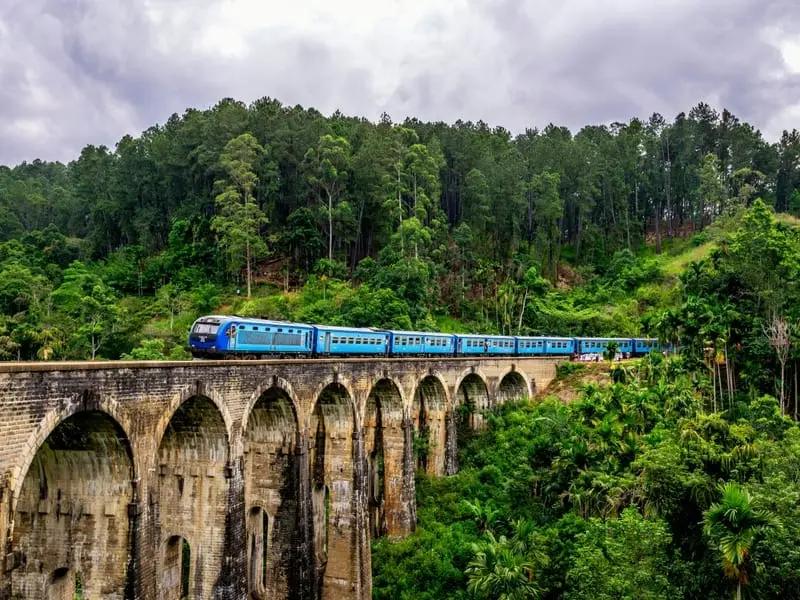
Two nights is the right amount of time. On the first day: arrive on the train from Kandy via Nanu Oya (one of the most scenic rail journeys in Asia), check in, explore the colonial town centre in the late afternoon. Evening: dinner at The Hill Club if you've booked ahead. On the second day: tea factory tour in the morning (Pedro or Labookellie), Hakgala Botanical Gardens and Seetha Amman Temple in the afternoon, Gregory Lake at dusk. Day three: day trip to Horton Plains and World's End — the plateau is 30 minutes from town and is one of Sri Lanka's great walks.
Getting There
The nearest train station is Nanu Oya (8km from town) — take a tuk-tuk or bus into Nuwara Eliya from there. The train from Kandy to Nanu Oya takes 2.5–3 hours on the scenic highland railway and passes through spectacular tea country. From Ella, the train back to Nanu Oya takes about 2 hours. Buses run directly from Colombo (5 hours) and from Kandy. If you're travelling by tuk-tuk from Ella, the road over the hills is beautiful but slow — allow 2+ hours.
What to Pack
Pack warmer than you think you need. Night temperatures in Nuwara Eliya drop to 8–10°C even in the dry season, and cold mist rolls in without warning. A fleece, a light waterproof jacket and long trousers are essential. If you're continuing to Horton Plains, mornings on the plateau can be 5–7°C — genuinely cold by any standard. The contrast with the coast is dramatic and most visitors are caught underprepared.