Colombo City Guide: What to See, Do and Eat in Sri Lanka's Capital
Last Updated: April 2026
Colombo is not a city that announces itself quietly. Sri Lanka's commercial capital of 2.3 million people is chaotic, loud, fragrant, and fascinating — a place where colonial Dutch and British architecture sits next to gleaming glass towers, where street food stalls operate in the shadow of five-star hotel lobbies, and where Buddhist temples, Hindu kovils, colonial mosques, and Catholic churches stand within blocks of each other.
Most travellers arrive in Colombo and immediately plan to leave, rushing towards the beaches and hill country. This is a mistake. Colombo rewards those who stay — at least a day or two — with excellent food, compelling history, and a street life that reveals more about modern Sri Lanka than any beach ever will.
Neighbourhoods to Know
Fort and Pettah
Colombo Fort is the historic commercial core, centred around the Old Parliament building, the Grand Oriental Hotel, and the harbour. The Dutch-era fort walls are long gone, but several colonial buildings survive. Immediately east is Pettah — Colombo's most intense bazaar district, a warren of streets specialising in everything from electronics to fabrics to spices. The experience is overwhelming in the best way.
Galle Face Green
The long oceanfront promenade south of Fort is Colombo's social heart. In the late afternoons and evenings, thousands of people walk, cycle, and gather here — families, couples, kite-flyers, street food vendors. The Galle Face Hotel, a Victorian-era grand dame at the northern end, offers excellent colonial-era sundowners overlooking the Indian Ocean.
Colombo 7 (Cinnamon Gardens)
The leafy, affluent residential district inland from Galle Face is home to the city's best addresses. Tree-lined streets of colonial villas, embassies, the National Museum, Viharamahadevi Park (the city's largest), and several of Colombo's top restaurants. A pleasant contrast to the chaos of Fort and Pettah.
Colombo 3 / Kollupitiya
The main commercial strip along Galle Road through Colombo 3 is where you'll find the city's most accessible concentration of cafes, restaurants, bars and boutiques. Liberty Plaza and the surrounding streets are particularly active.
Pettah and Slave Island (Colombo 2)
Slave Island, despite its grim name (a legacy of Dutch colonial slavery), is a fascinating neighbourhood — predominantly Muslim and Tamil, with kovils and mosques side by side, excellent curry houses, and the Jami Ul-Alfar Mosque, one of Colombo's most photographed buildings with its striking red-and-white striped exterior.
What to See
- National Museum of Colombo — the country's foremost museum; essential for understanding Sri Lanka's 2,500-year history, art and culture (Colombo 7, LKR 500 entry)
- Gangaramaya Temple — the most eclectic temple in Sri Lanka; a bizarre and wonderful collection of Buddha statues, religious art and curios from around the world, beside the Beira Lake (Colombo 2, donations)
- Jami Ul-Alfar Mosque — the striking 1909 red-and-white mosque in Pettah (respectful dress required)
- Colombo Old Town / Fort — Dutch and British colonial architecture around the old harbour area
- Viharamahadevi Park — Colombo's green lung; a relaxed spot to observe local life, with a large seated Buddha statue as centrepiece (free entry)
- Dutch Hospital Shopping Precinct — a 17th-century hospital converted into a cluster of upscale restaurants and boutiques (Fort area)
Where to Eat
Colombo has the best restaurant scene in Sri Lanka by a significant margin:
- Ministry of Crab — the city's most celebrated restaurant, showcasing Sri Lankan crab in inventive preparations; book weeks ahead (Dutch Hospital precinct)
- Noodles — exceptional pan-Asian noodle dishes in a lively space (Colombo 3)
- Lucky Fort Restaurant — classic Chinese-Sri Lankan fusion that locals love; inexpensive and excellent
- Colombo Market Food Stalls — for authentic Sri Lankan street food: kottu roti, hoppers, string hoppers, roti wraps
- Gallery Café — beautifully designed cafe in a converted Geoffrey Bawa house; excellent for lunch (Colombo 7)
- The Galle Face Hotel — for sundowners and the classic Colombo colonial experience; their Sunday buffet is legendary
Shopping
- Pettah Market — wholesale bazaar for everything; not tourist-focused but atmospheric
- Barefoot Gallery — iconic Colombo institution; handwoven textiles, books, gifts and a lovely courtyard cafe (Colombo 3)
- Paradise Road — upscale Sri Lankan homeware, art and gifts (Colombo 3/7)
- Odel / One Galle Face Mall — modern malls for branded goods and Sri Lankan fashion labels
Getting Around Colombo
Traffic in Colombo is notoriously heavy during peak hours. Options:
- Tuk-tuk — ubiquitous and useful for short hops; use the meter or agree a price before getting in
- PickMe / Uber — ride-hailing apps work well in Colombo and are often cheaper than negotiated tuk-tuk fares
- Commuter railway — useful for reaching the Fort area from the southern suburbs
- Walking — practical within neighbourhoods (Galle Face to Fort is a pleasant 20-minute walk along the coast); less practical for crossing the city
Where to Stay
- Budget: Hostels and guesthouses in Colombo 3/6 from LKR 3,000–6,000/night
- Mid-range: Comfortable boutique hotels in Colombo 3/7 from LKR 10,000–20,000/night
- Luxury: Shangri-La, Cinnamon Grand, Galle Face Hotel — from USD 150–300/night
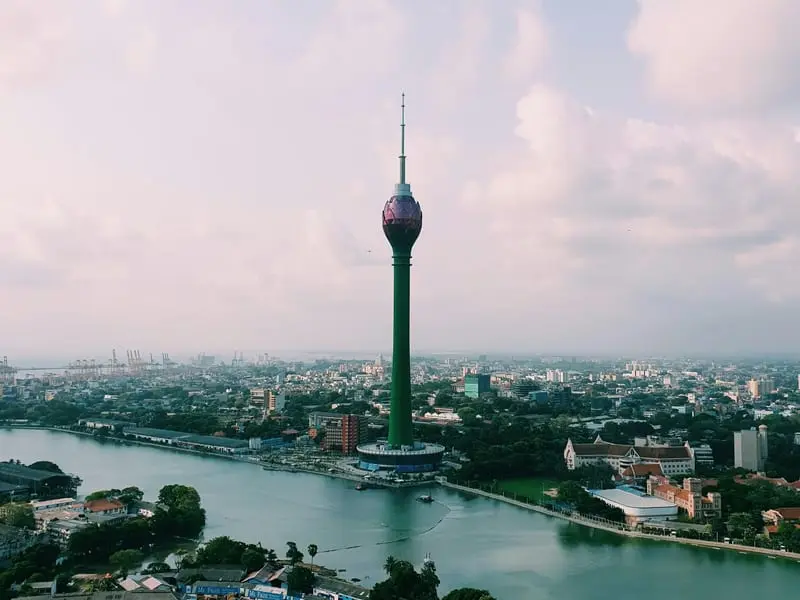
Colombo is a city in rapid transition — new restaurants, bars, and boutiques open monthly, the skyline changes year on year, and an increasingly confident local creative scene makes it an exciting place to spend time. Give it at least a full day, and it will likely earn another.