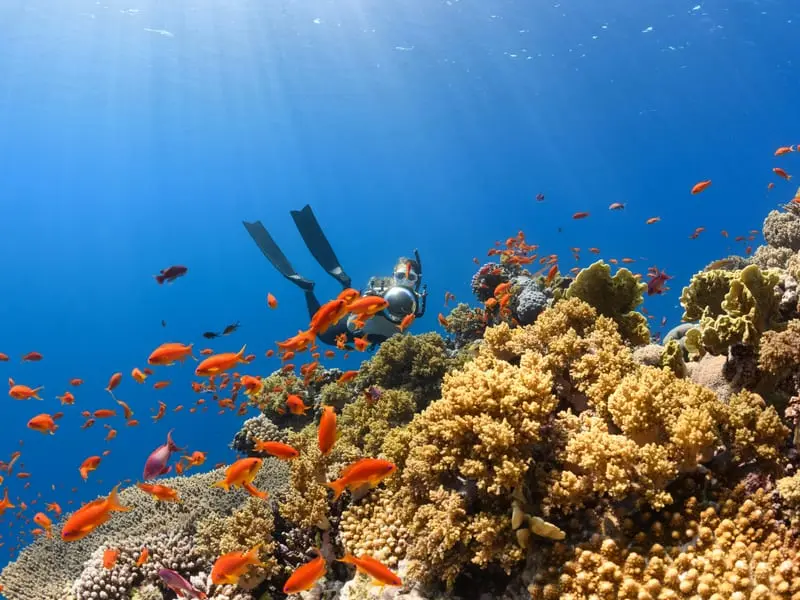
Sri Lanka's underwater world is one of its most underappreciated natural assets. The island is surrounded by warm, clear Indian Ocean water (27–30°C year-round — no wetsuit needed) and the best sites offer rich marine biodiversity: coral gardens teeming with reef fish, sea turtles that appear reliably at most south coast beaches, blacktip reef sharks at Pigeon Island, and a series of accessible wreck dives off the south coast. The two distinct seasons (south/west November–April, east May–September) mean there is excellent underwater visibility somewhere around the island throughout the year.
Best Snorkelling Sites
Pigeon Island National Marine Park, Trincomalee
Sri Lanka's finest snorkelling site — a protected marine park off Nilaveli beach on the east coast with two small rocky islands surrounded by some of the best-preserved coral reefs in the country. Blacktip reef sharks are a regular sight in the shallows (harmless to snorkellers), along with reef fish in remarkable abundance: parrotfish, surgeonfish, clownfish, moorish idols, and occasionally green and hawksbill sea turtles. Access by boat from Nilaveli (15 minutes). Entry fee required for the marine park. Best May–September (east coast season). See our Trincomalee guide.
Hikkaduwa Marine Sanctuary
The most accessible snorkelling on the south coast — a protected coral reef just offshore from Hikkaduwa beach, reachable from the shore in waist-deep water. The reef was badly damaged by the 2004 tsunami and bleaching events but has recovered significantly. Reef fish are abundant; sea turtles are regular visitors and have become remarkably habituated to snorkellers. Glass-bottom boats are available for non-swimmers. Best November–April (south coast season).
Unawatuna
The protected bay at Unawatuna has several snorkelling spots along its eastern headland — particularly around the Japanese Peace Pagoda rocks, where the coral growth is healthier than the main beach area. Sea turtles are a common sight. The calm, sheltered bay makes Unawatuna ideal for beginner snorkellers. Equipment rental available from beach shops. Best November–April.
Jungle Beach, near Unawatuna
A small, rocky cove a short hike from Unawatuna — less visited than the main beach, with better coral health along the rocky edges. Snorkelling kit rental from the single beach cafe. A short swim off the rocks reveals a rich reef community. Best reached on foot from Unawatuna village (15-minute walk through jungle).
Scuba Diving Sites
The Cargo Wreck, Hikkaduwa
A cargo ship that sank in 1903 in around 15 metres of water — now heavily encrusted with coral and home to a large resident lionfish, moray eels, and vast schools of snapper and fusilier. Accessible to Open Water divers. The most popular dive on the south coast. Multiple dive shops in Hikkaduwa offer guide dives and PADI courses.
Great Basses and Little Basses Reef, South Coast
Remote lighthouse reefs about 10km offshore from Kirinda, near Yala — accessible only by boat in calm conditions (February–April). Considered Sri Lanka's best diving: pristine coral, strong currents, hammerhead sharks, whale sharks, and the wreck of an 18th-century Indian trading vessel still containing its cargo of silver rupees. Expert divers only; arrange through specialist liveaboard operators.
Bar Reef Marine Sanctuary, Kalpitiya
Sri Lanka's largest coral reef — a remote, protected atoll off the northwest coast, accessible from Kalpitiya. Dolphins and spinner dolphins are year-round residents; whale sharks appear November–March; the coral is pristine. Accessible only by boat (45-minute crossing). Kalpitiya is also Sri Lanka's kite surfing capital.
Book a Snorkelling or Diving Trip
Guided snorkelling trips to Pigeon Island or Hikkaduwa include equipment, boat transfer and a guide to the best spots.
Find Water ActivitiesThis post contains affiliate links. We earn a small commission at no extra cost to you.
Practical Information
Equipment rental is widely available at all beach destinations — mask, snorkel and fins for LKR 300–600/day. Bring your own mask if possible for a guaranteed fit. Reef shoes are recommended for entries over rocky or shallow coral — protecting both you and the reef. Sun protection is critical — the tropical sun, reflected off white sand and water, burns extremely quickly; reef-safe sunscreen is increasingly requested at marine parks. Don't touch coral — even a light touch can kill coral polyps and spread bleaching. Float over the reef, don't stand on it. Turtle etiquette: observe from at least 2 metres; don't chase, corner or touch sea turtles — they are endangered and protected under Sri Lankan law.