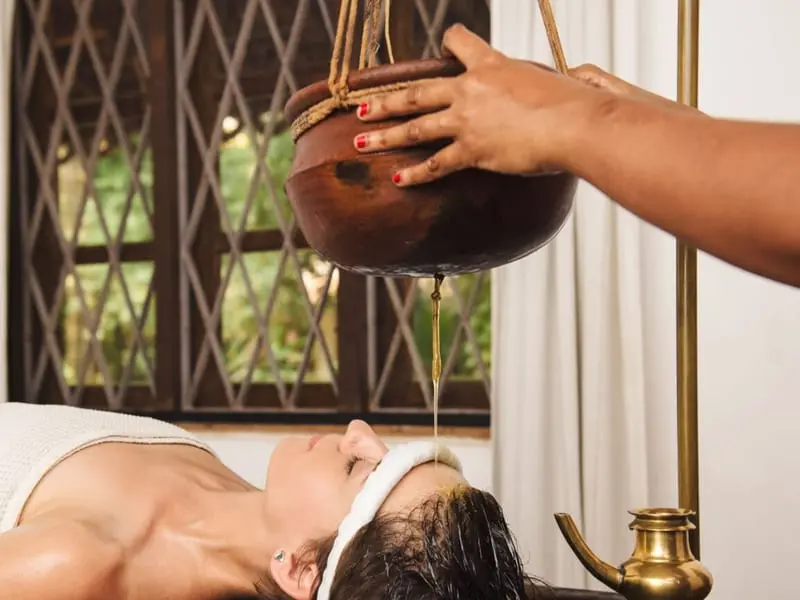
Ayurveda — the ancient Indian system of medicine meaning "knowledge of life" — has been practised in Sri Lanka for over 3,000 years and is deeply embedded in the culture. Sri Lanka's Ayurvedic tradition is distinct from the Indian version, incorporating local medicinal plants unique to the island's biodiversity and methods passed down through hereditary physician families (the vedamahattaya system). Today, Sri Lanka offers one of the most developed and credible Ayurveda tourism industries in the world — from luxury resort spa treatments to medically rigorous residential retreats supervised by qualified Ayurvedic physicians. Understanding the difference between these categories is crucial to finding the right experience.
Types of Ayurvedic Experience
Spa Treatments (1–2 hours)
Available at most beach hotels and wellness centres across the island. These are relaxation-focused treatments — a warm oil massage (abhyanga), a herbal steam bath, or a shirodhara (warm oil poured rhythmically onto the forehead). Excellent for rest and stress relief, and widely available from USD 30–80 per session. These are not therapeutic Ayurveda in the traditional sense — no diagnosis, no dietary prescription — but they draw on genuine Ayurvedic techniques and use herbal oils prepared to traditional recipes. Good entry-level introduction to Ayurvedic bodywork.
Short Retreat Programs (3–7 days)
Residential programs at dedicated Ayurveda resorts — beginning with a consultation with an Ayurvedic physician (BAMS degree), who assesses your dosha constitution (Vata, Pitta or Kapha) and prescribes a personalised program of treatments, herbal medicines and dietary guidelines. Treatments run daily (typically 2–3 hours of treatments per day). A 5–7 day program can address stress, digestive issues, sleep problems and general detoxification. Budget USD 150–400 per day at quality resorts (including accommodation, all meals on the Ayurvedic diet prescribed for you, and treatments). Quality varies enormously — check that any resort employs qualified BAMS physicians, not just trained technicians.
Panchakarma (14–28 days)
The complete Ayurvedic purification and rejuvenation program — a medically supervised residential course designed to deeply cleanse the body and rebalance the constitution. Panchakarma (literally "five actions") includes specific purification procedures: virechana (purgation), basti (medicated enema), nasya (nasal administration of herbal preparations), and others depending on your constitution. This is genuine therapeutic medicine, not spa tourism — the treatments can be intense, the dietary restrictions strict, and the commitment significant. A minimum of 14 days is required for meaningful results; 21 days is considered optimal. Undertaken correctly, under a qualified physician's supervision, panchakarma is reported to be genuinely transformative.
Where to Go
The west coast (Kalutara, Beruwala, Bentota) has the highest concentration of Ayurvedic resorts — most established when German and Scandinavian health tourists began arriving in the 1970s. The hill country around Kandy and Ratnapura also has excellent dedicated retreat centres, with a cooler climate that some practitioners consider more conducive to deep treatment. Sri Lanka's south coast (Tangalle, Weligama) has more recently developed high-end Ayurveda wellness resorts combining genuine treatment with luxury accommodation. The Government of Sri Lanka has an official Ayurveda regulatory board — look for resorts with government certification and resident BAMS physicians.
Find an Ayurveda Retreat
Search reviewed Ayurvedic resorts and compare programs — from relaxing oil treatments to full panchakarma residential courses.
Browse Ayurveda RetreatsThis post contains affiliate links. We earn a small commission at no extra cost to you.
Herbal Gardens and Medicine
Several herbal gardens and spice plantations in the Kandy area offer guided tours of Ayurvedic medicinal plants — a fascinating complement to any wellness experience. These tours explain which plants treat which conditions, how herbal preparations are made, and the principles of Ayurvedic diagnosis. The Pinnawela Herbal Garden and various spice gardens along the Kandy–Colombo road offer these tours, typically 45–60 minutes. Most include a free consultation from a local practitioner and, optionally, a brief oil treatment. Be aware that these garden tours often include a hard sell of herbal products — buy only what you genuinely want.
Practical Advice
For serious therapeutic benefit, commit to a minimum of 7 days. For a resort stay of genuine quality, budget at least USD 150 per day (all-inclusive). Avoid roadside "Ayurveda clinics" with no physician on site — these are unregulated and can be unsafe. The best indicator of quality is a resident BAMS-qualified Ayurvedic physician (recognisable by a government-issued certificate) who conducts your initial consultation and prescribes your individual program. Genuine Ayurvedic treatment is prescribed individually — any resort that offers the same treatments to every guest regardless of their constitution is selling spa tourism, not medicine. Neither approach is wrong, but knowing which you want before booking saves disappointment.